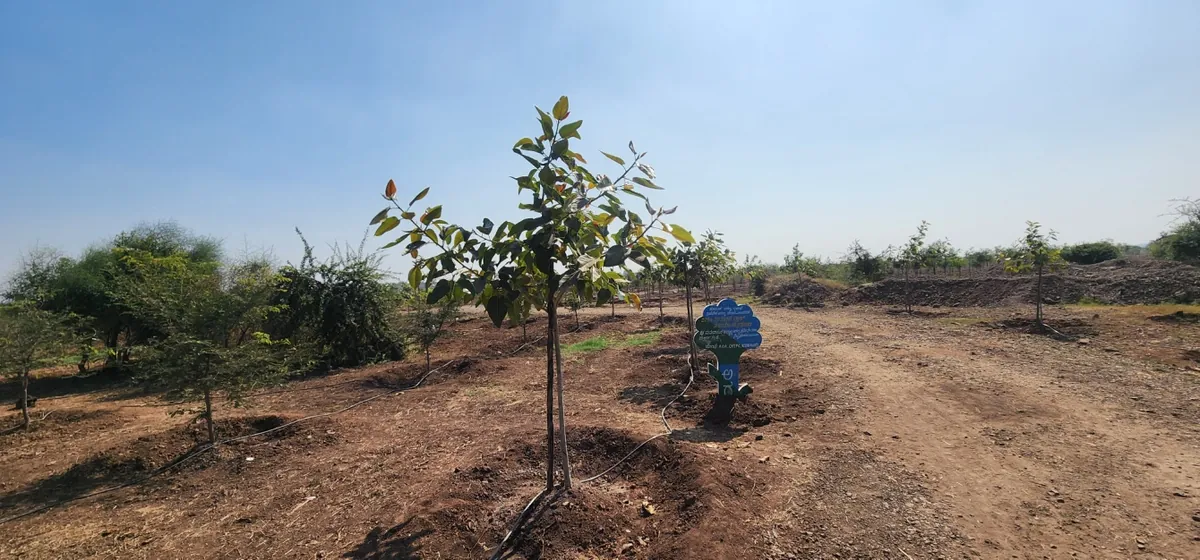
Mamdapur Forest Area
For 20 years, nobody could get trees to grow here. Then Dr. M. B. Patil asked one question that changed everything.
20 Years of Failed Attempts. One Question That Changed Everything.
People had tried to plant trees at Mamdapur before. Not once. Not twice. Over and over again, for two decades. And every single time, the saplings died. The summers were too harsh, the soil too dry, and without water, nothing survived.
When Dr. M. B. Patil found out that Vijayapura had just 0.17% forest cover, he did not move on. He sat with that number. Then he asked the forest department a simple question: what would it actually take to make trees survive here?
The answer was water. Not just during planting, but through every summer month when Vijayapura sees no rain at all. So before a single sapling went into the ground, a solar-powered drip irrigation network was laid across all 628 hectares, drawing water from the recharged Mamdapur tank. That one decision broke the cycle of failure.
What followed was a coalition nobody had tried before. NTPC Kudgi brought CSR funding. MNREGA brought workers. The forest department brought expertise. And the people of Mamdapur village were given ownership of the forest they were helping to build.
6 Times Bigger Than Lalbagh
When completed, the Mamdapur forest will be six times larger than Lalbagh Botanical Garden in Bengaluru. That is not a small thing for a district that had almost no trees at all just a few years ago.
Water for the City
The trees around Mamdapur tank are doing something invisible but vital. They hold moisture in the soil, slow down runoff, and push water back into the ground. That groundwater eventually reaches the taps of Vijayapura's 4 lakh residents. A forest is not just trees. It is a water system.
Income for Local Families
The species planted here were not chosen at random. Fruit trees, medicinal plants, timber varieties. Once mature, these trees will produce things that can be sold. The village forest committees will manage that income and use it for local development. The forest pays back the people who protect it.
Wildlife Coming Back
Birds are already returning to Mamdapur. Local farmers say they have not seen some of these species in years. Pollinators are back too, which means better yields on surrounding farmland. When you plant a forest, you do not just get trees. You get an ecosystem.
How KVA Transformed Mamdapur
This is not a story about a government scheme. It is a story about what happens when someone refuses to accept that a place is beyond saving. Here is every step, in order.
Uprooting the Prosopis Juliflora
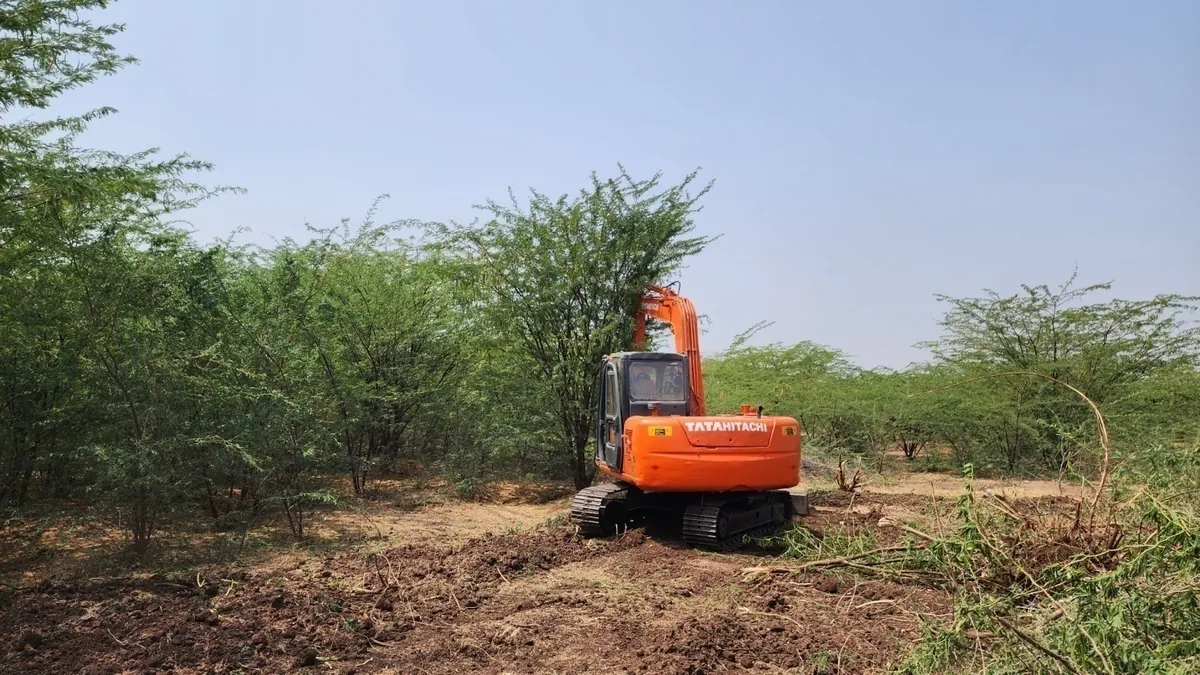
The land was not empty. It was full of Prosopis juliflora, a thorny invasive shrub that locals call Ballari jaali. It had taken over every corner of the 628 hectares, crowding out anything native, drinking up groundwater, and giving nothing back. Before any tree could go in, this had to come out. Every root, by hand. It was hard, unglamorous work, and it was where the whole project began.
Burning the Uprooted Shrubs
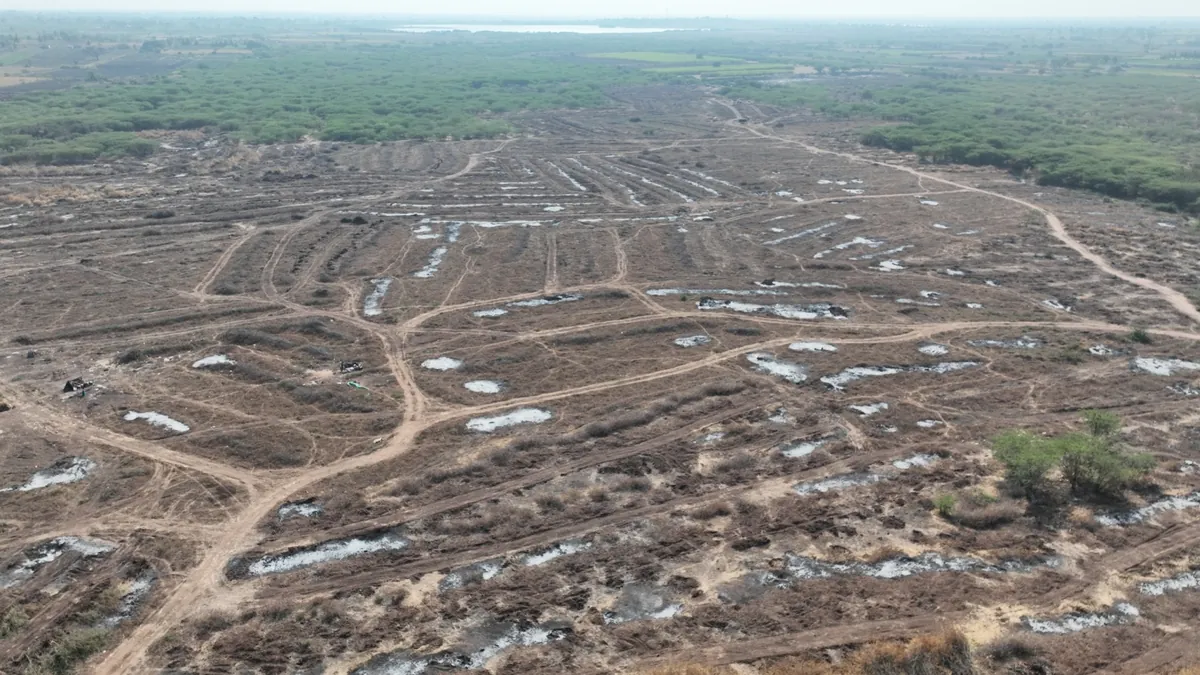
Uprooting was not enough. Prosopis juliflora can regrow from root fragments left in the soil. So the uprooted shrubs were burned on site. The ash went back into the ground as nutrients. The risk of regrowth was eliminated. It sounds simple, but this step is what stopped the invasive species from coming back and undoing everything that came after.
Leveling the Land
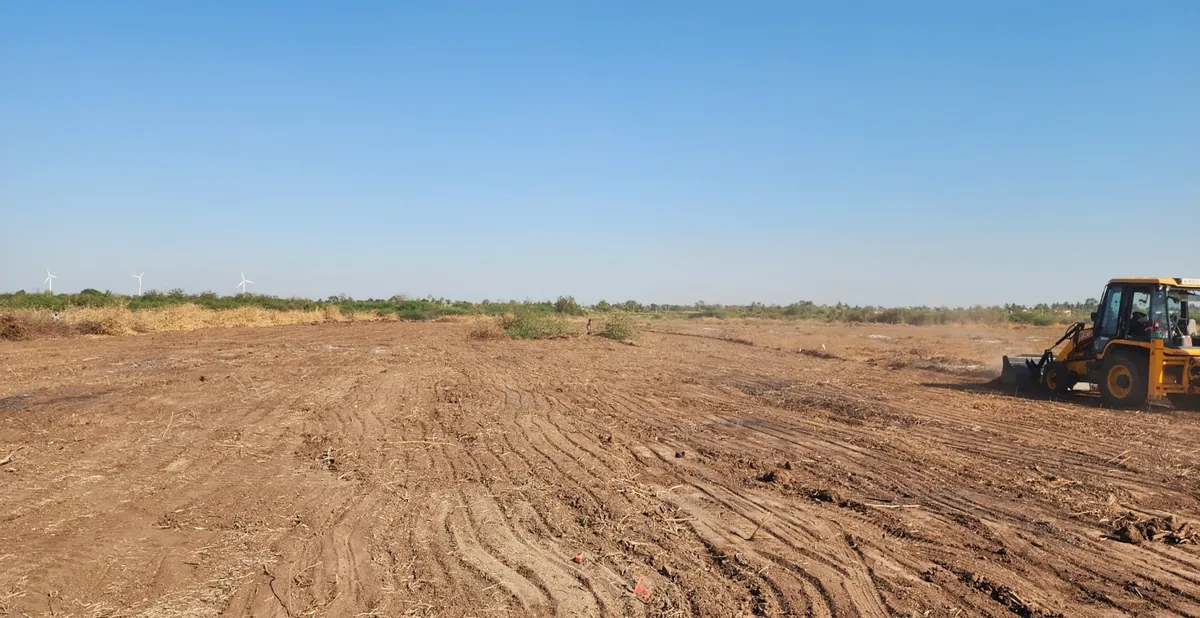
Once the shrubs were gone, the land needed to be leveled before pitting could begin. Uneven ground means water pools in some places and runs off in others. For drip irrigation to work evenly across 628 hectares, the terrain had to be consistent. This was the kind of preparation that does not show up in photographs but determines whether the whole project works.
Advance Pitting Work
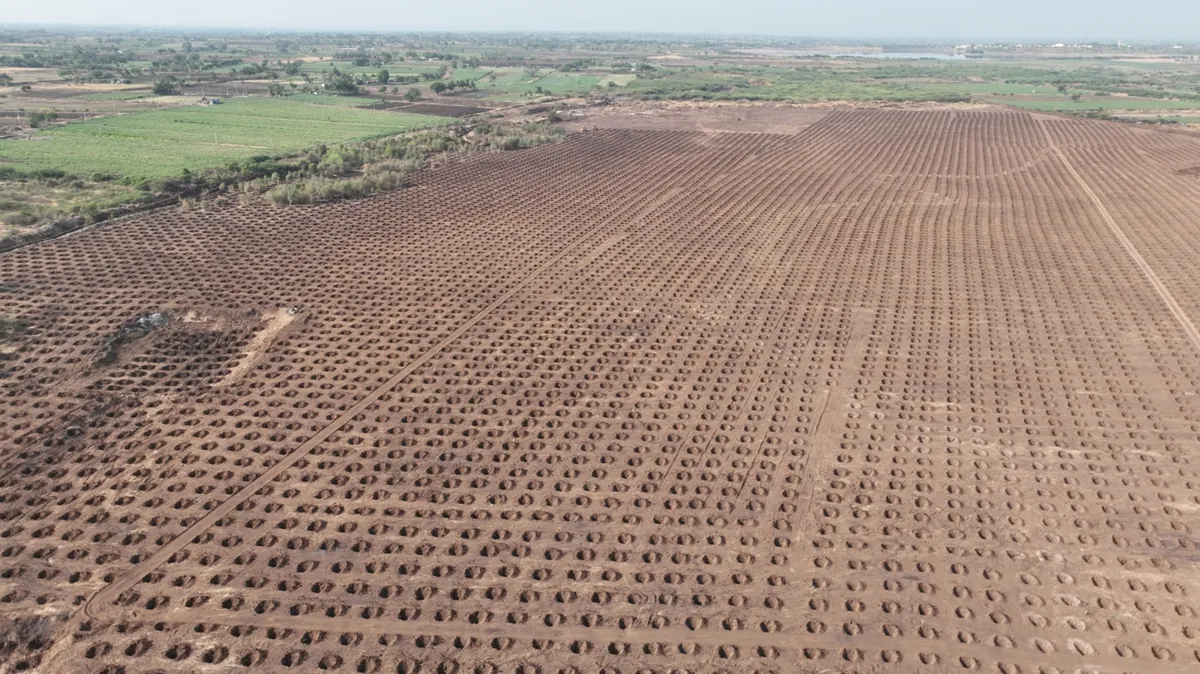
Pits were dug weeks before planting. This is called advance pitting, and it matters more than most people realise. A pit that has had time to sit open weathers the soil, improves aeration, and starts collecting moisture. Each pit was sized for the species going into it. Across 628 hectares, this meant thousands of individual decisions made carefully and in advance.
Pits Ready Across the Site
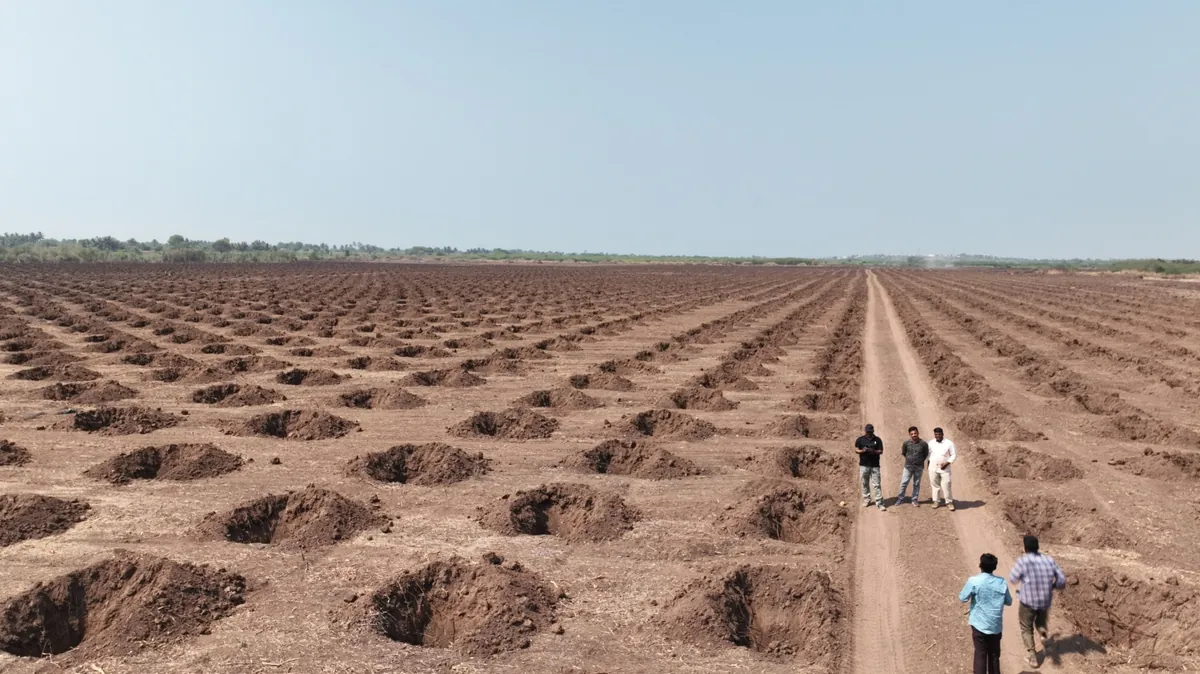
Row after row of prepared pits, stretching as far as you could see. Each one waiting. This is what commitment looks like before a single tree goes in. The team that Dr. M. B. Patil assembled did not cut corners here. They prepared the ground properly, because they had seen what happens when you do not.
Stakes Procured and Dipped in Coal Tar
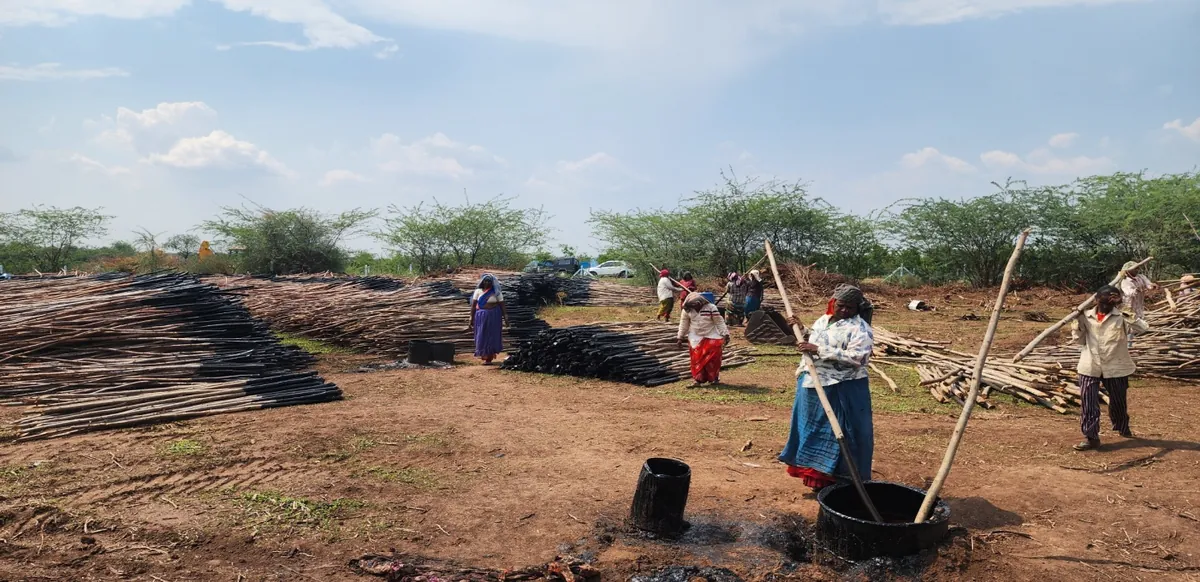
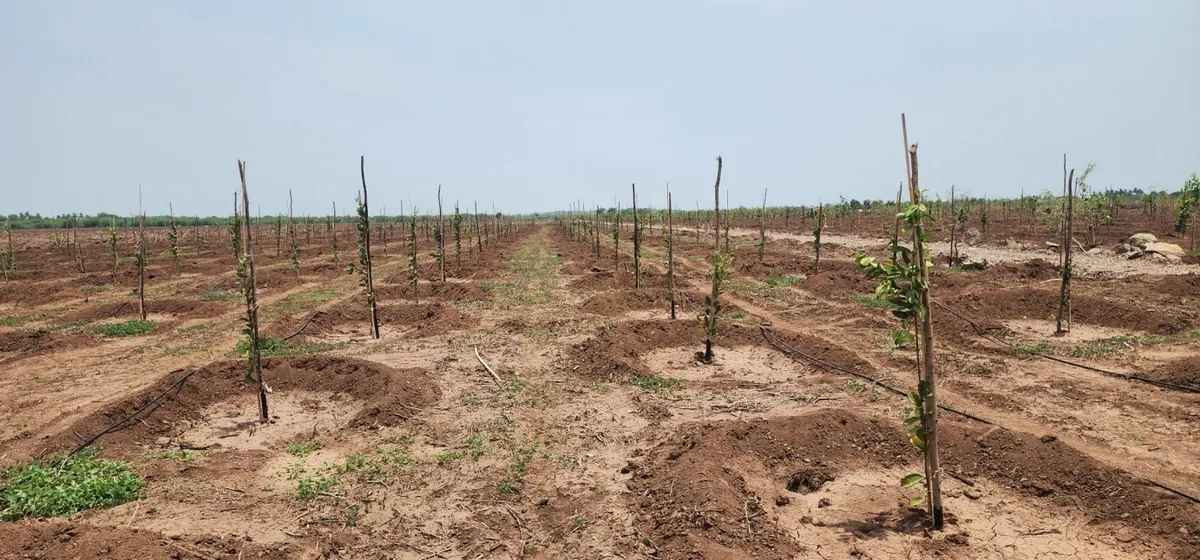
Every sapling needed a wooden stake to hold it upright and protect it from wind and grazing animals in those first vulnerable months. But a stake that rots or gets eaten by termites is useless. So every single stake was dipped in coal tar at the base before it went into the ground. It is a small thing. But it is the kind of small thing that separates a plantation that survives from one that does not.
Stakes Prepared at Scale
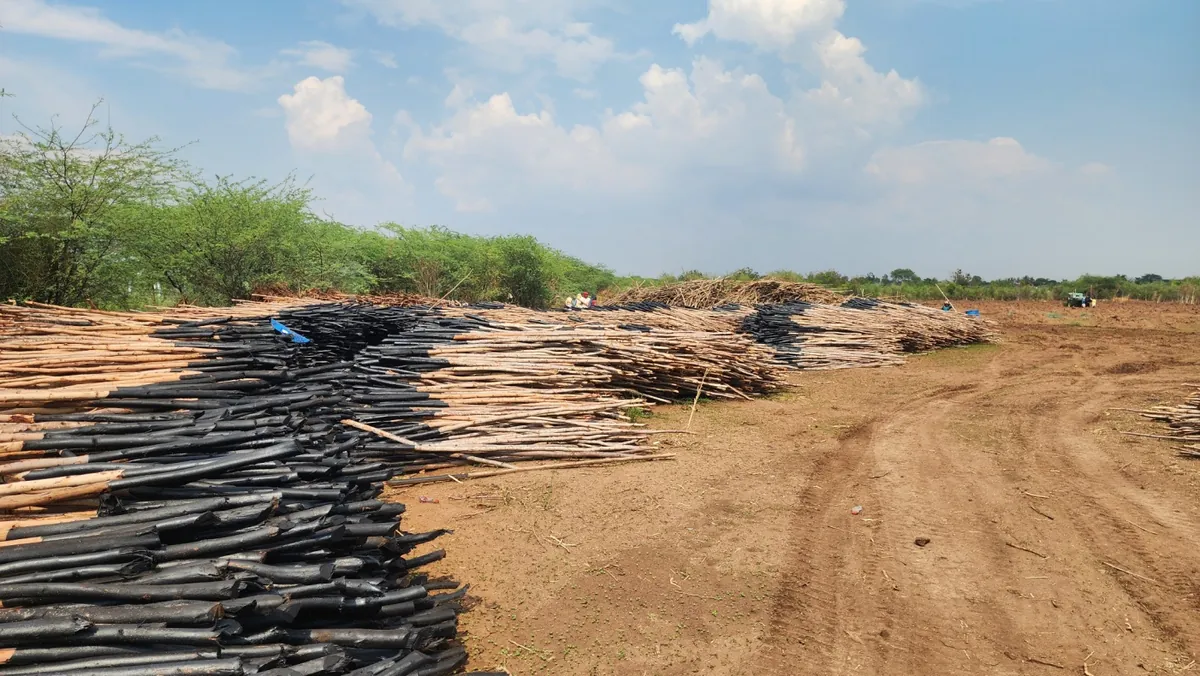
1,27,000 saplings. 1,27,000 stakes. Each one treated. Teams worked through this systematically, making sure everything was ready before planting day. Nobody talks about this part. But if you skip it, you lose trees. The Mamdapur team did not skip it.
Planting, Then Watering Immediately
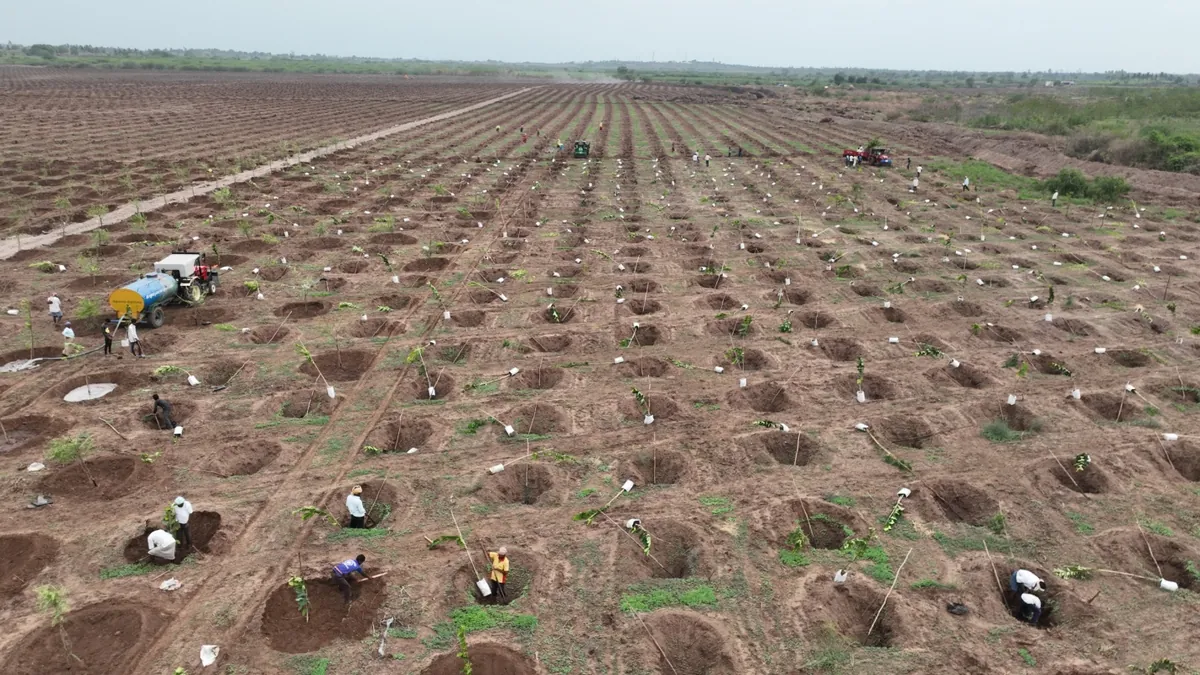
50,000 saplings went in under a CSR partnership with NTPC Kudgi, funded at Rs 2.9 crore. Another 10,000 came through MNREGA. Each sapling was planted, staked, and watered on the same day. The drip lines were already in place, solar-powered, drawing from the Mamdapur tank. The saplings did not have to wait for rain. Water came to them.
The Community Plants Together
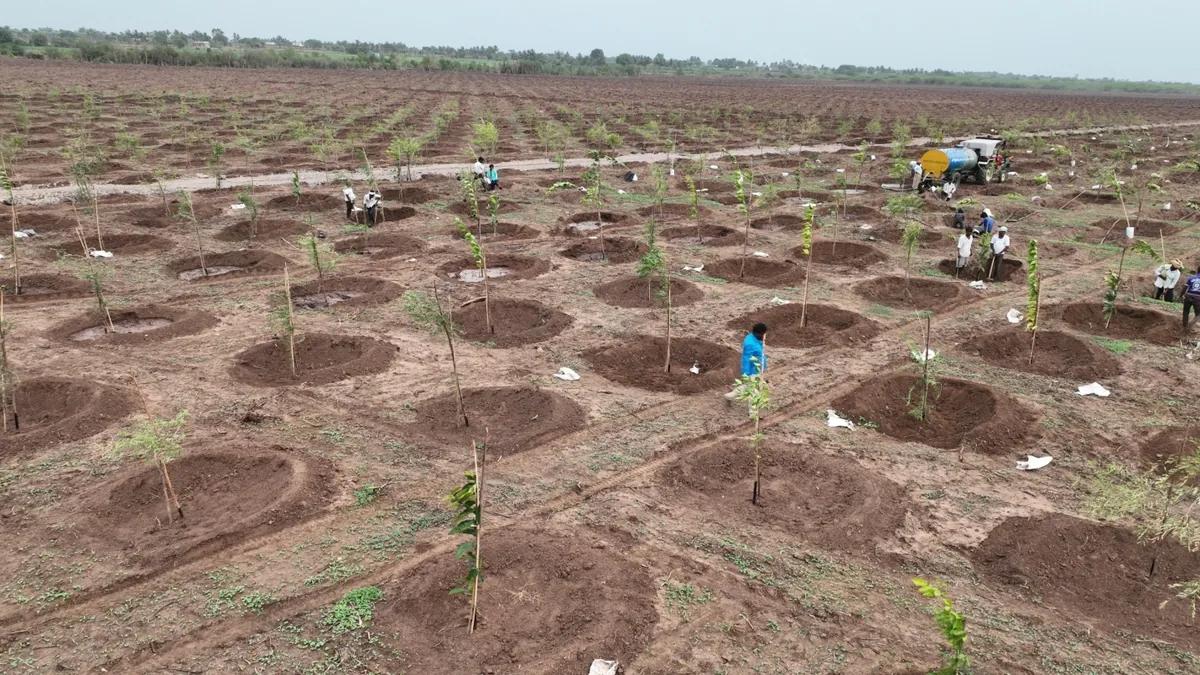
Forest staff, MNREGA workers, and people from Mamdapur village planted side by side. Dr. M. B. Patil was clear from the start: this forest had to belong to the people living next to it. Village forest committees were formed. The community was not just labour. They were owners. That ownership is what keeps a forest alive long after the planting teams have gone home.
The First Rain After Planting
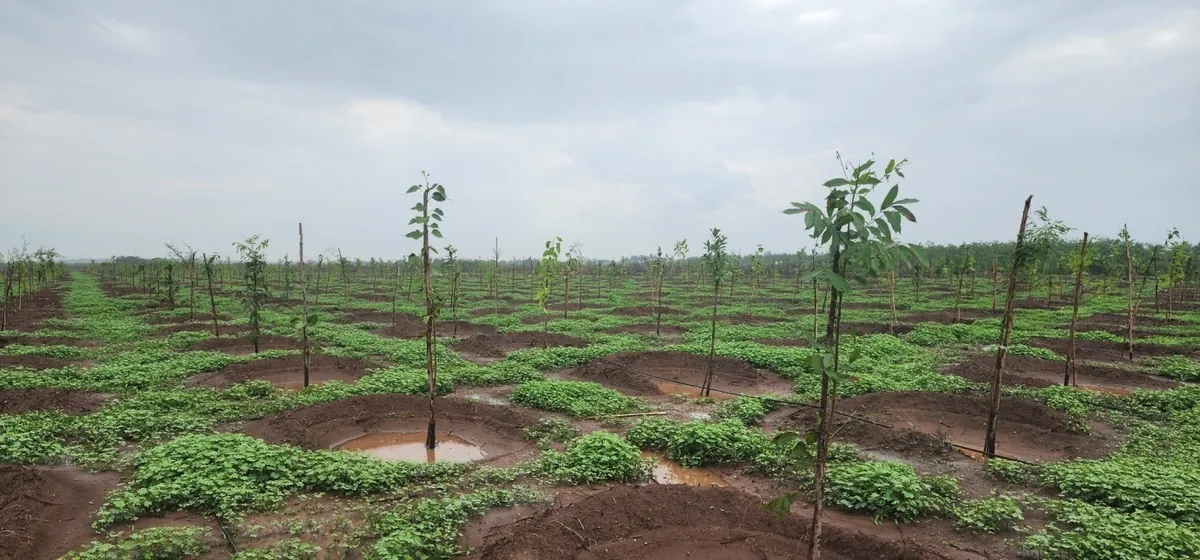
The drip irrigation had kept the saplings alive through the dry months. Then the monsoon arrived. That first rain on newly planted trees is something the people who worked here will not forget. It was the land responding. The saplings that had been kept alive by pipes and solar panels now had the sky on their side too. The survival rate held at 95%.
The Saplings Are in the Ground
The planting was done. The stakes were holding. The drip lines were running. Where there had been bare cracked earth, there were now rows of young trees. The work shifted from planting to protecting. Anti-grazing barriers went up. Forest guards came on duty. The community kept watch. The saplings were small, but they were alive, and they were theirs.
The Planting Work Is Complete
1,27,000 trees. 628 hectares. Done. The land that had said no to trees for 20 years had finally said yes. The forest was young and it had a long way to go, but it was real. Mamdapur showed that the problem was never the land. The problem was the approach. Get the approach right, and the land responds.
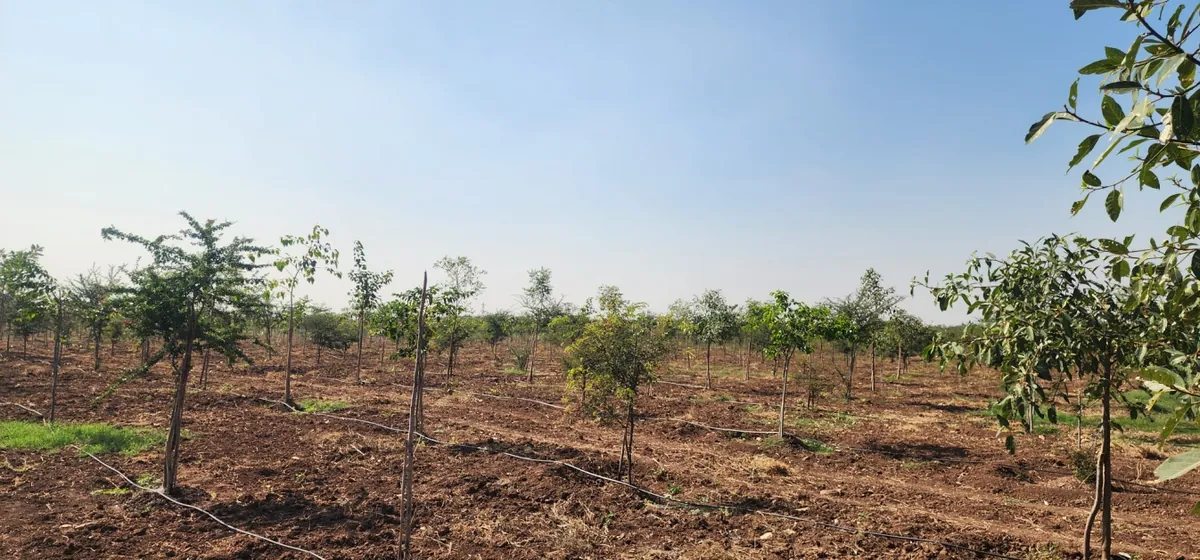
Mamdapur Today
The trees are growing. Birds are back. The tank holds water. The village forest committees are active and earning. And the land that everyone had given up on is now becoming one of the largest man-made forests in Karnataka. Six times the size of Lalbagh. This is what Dr. M. B. Patil's Koti Vruksha Abhiyan looks like when it works.
Mamdapur at a Glance
A 500-Year-Old Tank, Given a Second Life
The Mamdapur tank was built in the 16th century by the Adilshahi kings. It is one of the largest man-made tanks in Karnataka, spread over 400 acres, and it once held nearly 1 tmcft of water. The engineers of that era used underground terracotta pipes to carry water to surrounding villages. Paddy was grown here. Communities thrived.
Then came decades of drought, neglect, and the slow destruction of the inlet streams that fed the tank. By the early 2000s, it was dry. The forest around it was gone. The land had been taken over by invasive shrubs. The villages that once depended on it had moved on.
What Koti Vruksha Abhiyan is doing at Mamdapur is not just planting trees. It is giving a 500-year-old ecosystem a second chance. The tank is filling again. The forest is growing back. And the communities around it are reconnecting with land that their ancestors once called home.
Come See What We Are Building
Mamdapur is not finished. The forest is still young and the next phase of planting is ahead. If you want to be part of it, we would love to have you.