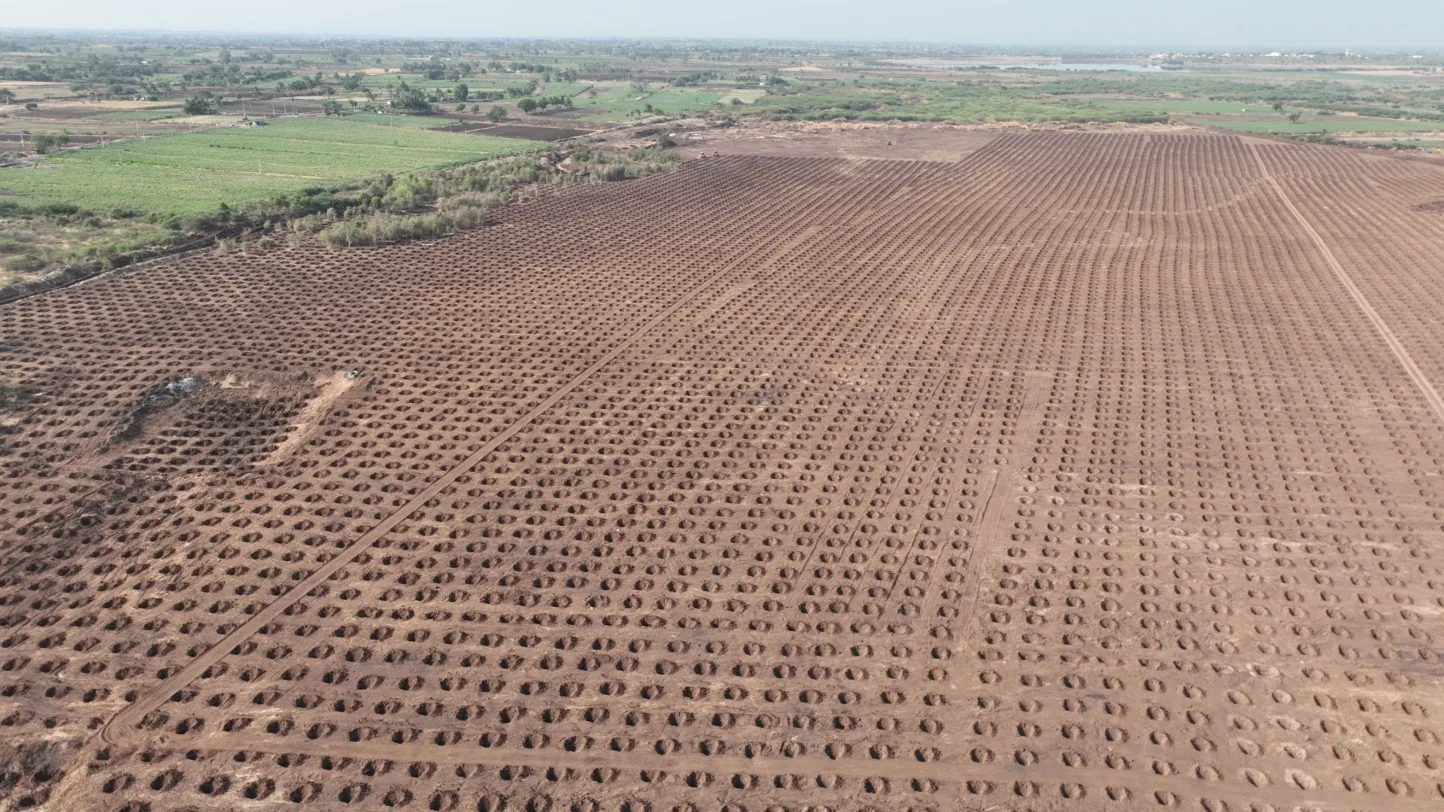
A District Transformed
Vijayapura was once ranked among India's most drought-prone districts. Today it is a case study in what community-led afforestation can achieve - and The New York Times took notice.
"How a District in India Came Together to Plant 15 Million Trees"
Vijayapura is easy to miss in the vastness of the Indian subcontinent. But this historic district in Karnataka is a proof of concept for what community-led afforestation can achieve.
When a forest official told me Vijayapura had only 0.17% forest cover, I thought he made a mistake. That day, I thought we should do something about it.
M.B. Patil, Minister for Large & Medium Industries and Infrastructure Development, Karnataka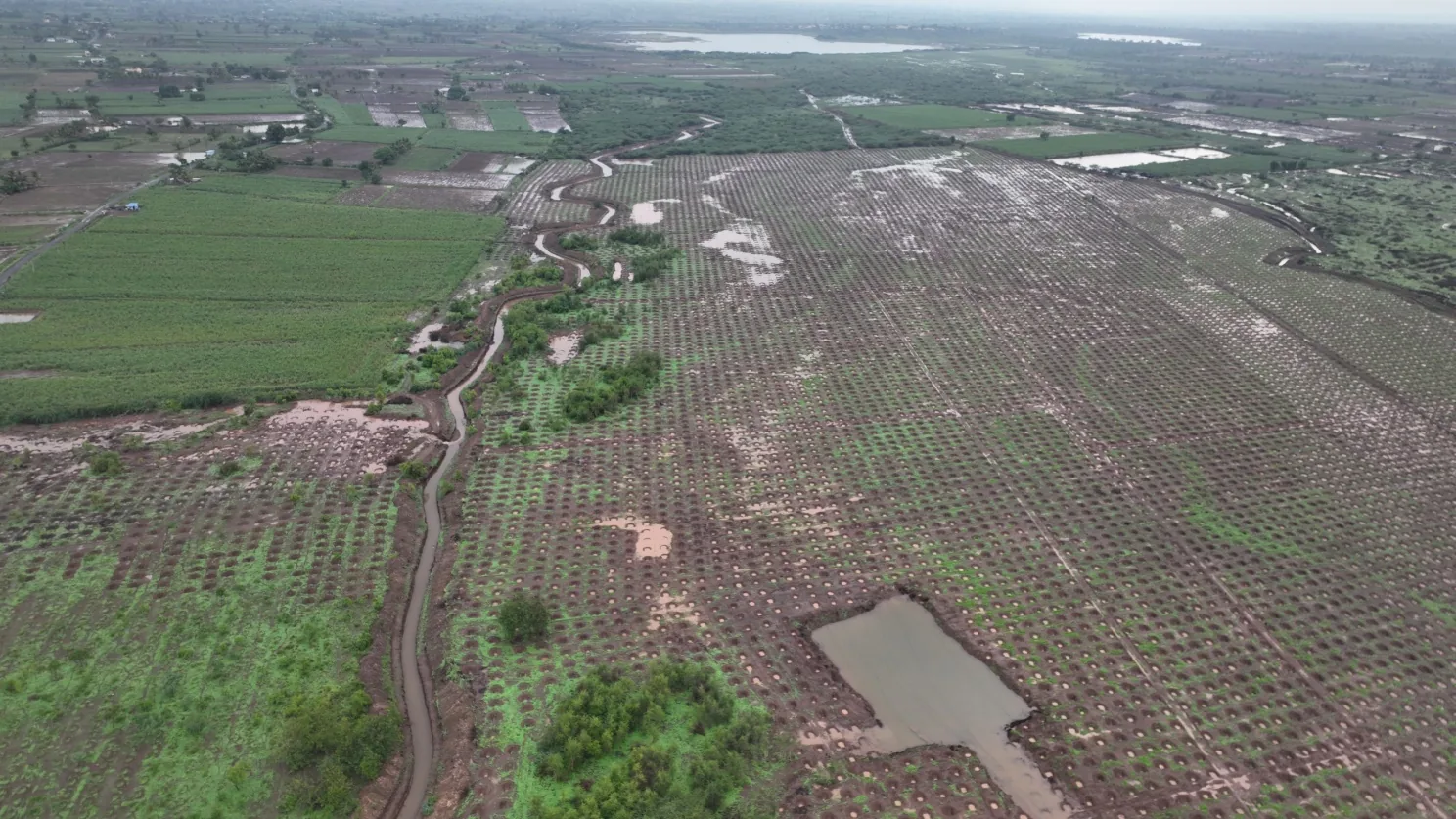
"Suddenly we had people queuing up for hours to get the saplings they wanted."
Santosh Ajur, Local Forest OfficerThe Numbers Don't Lie
Every metric that matters has moved in the right direction. These are verified, recorded outcomes - not projections.
Nature Came Back on Its Own
Nobody planned for the leopards. Or the flamingos. When the trees came back, the animals followed. That is how ecosystems work - and it is one of the most powerful proofs that what Koti Vruksha Abhiyan built is real.
The New York Times reported that endangered blackbucks, leopards, snakes and several species of birds have become a common sight. Over 280 bird species have been recorded, including migratory flamingos, bar-headed geese, Siberian cranes, and pintail ducks at Almatti's backwaters.
What It Took to Get Here
Behind every tree is a nursery, a volunteer, a decision, and years of follow-through.
14 Nurseries, 200+ Species
Saplings were priced at just 3 to 10 rupees to ensure everyone could participate. Over 200 native species were cultivated - from banyan and tamarind to mango, neem, and java plum.
Saplings were grown in 25 to 80 kilogram bags that retain soil and moisture, maximising survival rates through Vijayapura's brutal summers.
17,000 Acres of Land
The government oversaw planting across roughly 17,000 acres. Villages created new forest blocks. In 2017, 60,000 saplings were drip-irrigated across 540 acres at Almatti.
At Mamadapur Reserve, 1.27 lakh saplings now grow across 628 hectares of what was once barren land, running on solar-powered drip irrigation.
A Community Movement
Farmers who once feared trees would shade their crops were educated in agroforestry. "So, we asked them: What saplings do you want?" said forest officer Santosh Ajur. The response was overwhelming.
People now give each other trees at weddings, birthdays, and cultural events. A marathon organised around tree planting has become a hit with younger residents.
The People Behind the Trees
The campaign's greatest achievement is not the number of trees. It is the culture it created.
The Green Man of Domanal
Nanasaheb Patil, 71, a retired government official, planted thousands of trees on a barren hill using his own savings. He recalled towering date palms in the area 60 years ago, lost to droughts and the famine of 1972. "I am trying to give back what I can," he told The New York Times.
Farmers Who Changed Their Minds
For generations, Vijayapura's farmers avoided trees, fearing they would shade crops. Through patient education in agroforestry, they began planting trees alongside sugarcane and cotton. Today, those same farmers report better soil moisture, reduced input costs, and additional income from fruit-bearing trees.
A Model Other States Want
"We want to learn from this and expand planting in our state," said Sanjay Gherde, a forest official from Maharashtra, who travelled to Vijayapura specifically for training. The NYT reported that the program has attracted millions of dollars of private investment and interest from other Indian states.
The World Is Watching
Vijayapura's transformation has drawn attention from national and international media.
"Vijayapura is a proof of concept for the state government's multi-million dollar effort to address severe droughts and extreme heat."
"What began as a desperate push against drought has grown into a movement that has reshaped culture, climate, and identity."
"Vijayapura, once India's second-most drought-prone district, has transformed into a green paradise."
"The main purpose of the project is to increase forest cover, improve rainfall, and generate more oxygen in the environment."
Coverage That Tells the Story
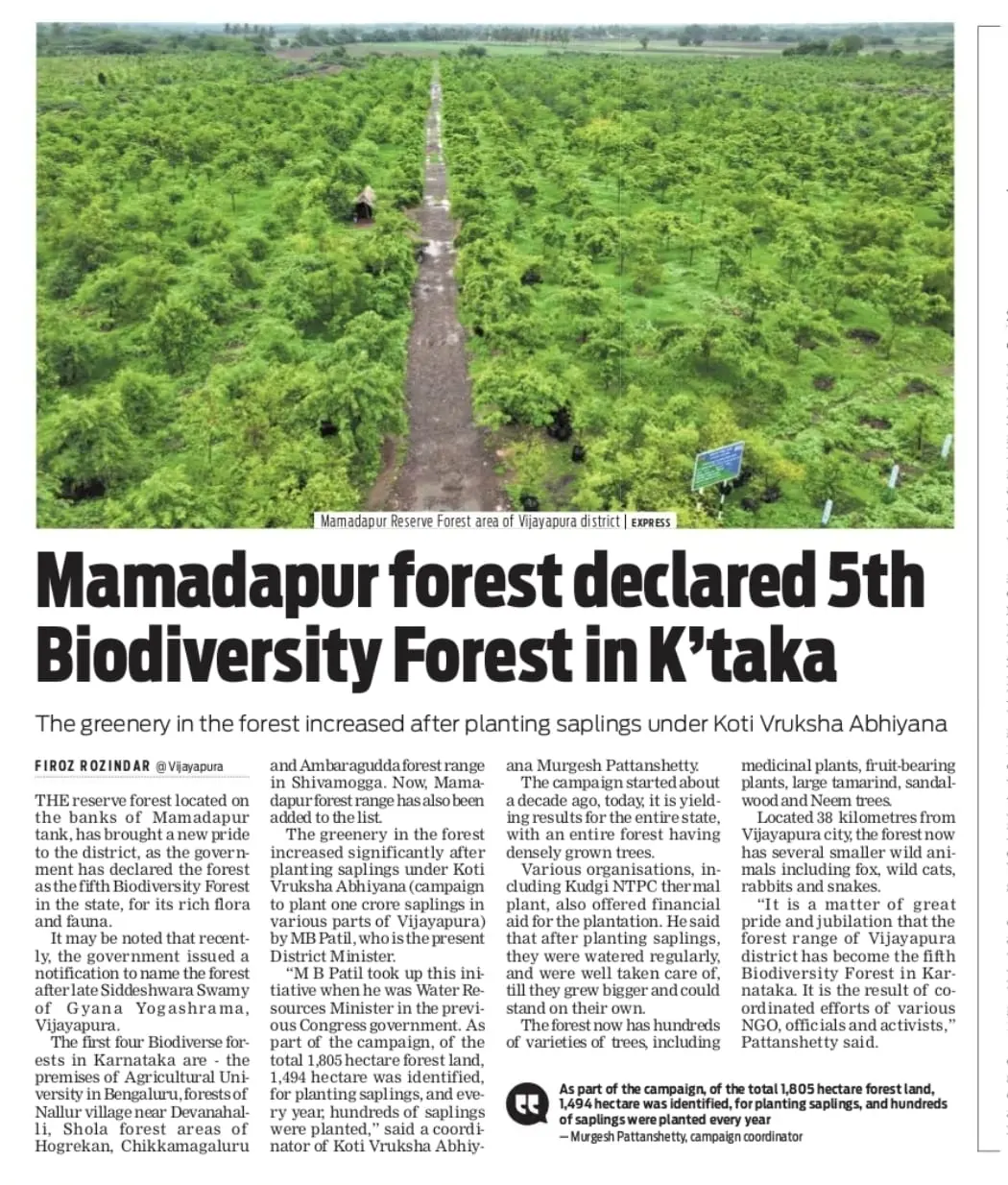
Newspaper clippings, event coverage, and media moments from across the Koti Vruksha Abhiyan journey.
Where We Stand
1.5 crore trees is not the finish line. It is the foundation.
Add Your Impact to Ours
Every volunteer, every runner, every donor multiplies what we can do. The next 3.5 crore trees need you.